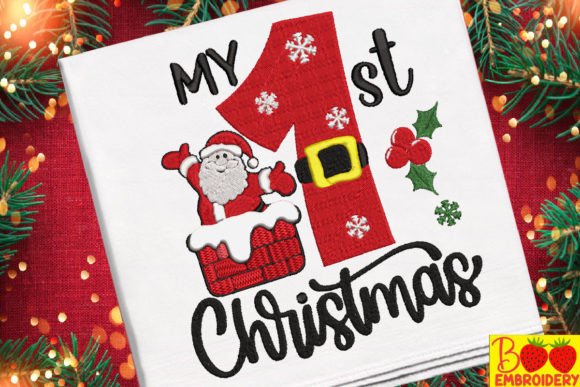
My 1st Christmas and Cookies
As an embroidery designer with years of experience in the craft fair and handmade market scene, I’ve seen countless designs come and go. My 1st Christmas and Cookies is one that stands out for its charm and versatility. It’s a design that feels like a warm hug on a cold winter day—perfect for adding a touch of festive cheer to any handmade product.
First Impressions: Adorable and Festive
From the moment you see My 1st Christmas and Cookies, it exudes a sense of nostalgia and innocence. The design is cute, simple, and immediately recognizable. It has a farmhouse feel with its soft curves and playful elements, making it ideal for a wide range of products. Whether you're targeting a family-friendly audience or a more upscale handmade market, this design has the potential to appeal to both.
Where My 1st Christmas and Cookies Shines
This machine embroidery design works exceptionally well on a variety of craft fair products. On a tote bag design, it adds a personal and festive touch that customers love. As an apron embroidery, it can be a standout piece that draws attention at your booth. For tea towel embroidery, it brings a cozy, homey vibe that many buyers seek during the holiday season.
- Embroidered patch: Perfect for adding to jackets, backpacks, or as a collectible item.
- Stitch density: The design is well-balanced, allowing it to work on both light and dark fabrics without losing detail.
- Thread colors: A good contrast between the design and fabric will make it pop, especially on darker materials.
Practical Selling and Production Points
One of the strengths of My 1st Christmas and Cookies is how easy it is to understand at a glance. It doesn’t require a lot of explanation, which is great for quick customer engagement. This makes it ideal for small shop product displays where visual impact is key.
The design can be used as a small accent or a large focal point, depending on your needs. For example, on a fabric pouch, it can be a subtle detail, while on a market bag, it becomes the main attraction. It also photographs well for Etsy seller listings, especially when paired with high-quality images and a clean background.
When it comes to batch production, the design is repeatable and consistent. However, it’s important to check the hoop size and ensure that your embroidery machine can handle the file. A stabilizer is recommended for thicker fabrics or textured towels to prevent puckering or distortion.
Careful-Use Notes
While My 1st Christmas and Cookies is generally straightforward, there are a few things to keep in mind. The design includes some fine details and small lettering that may not hold up on very thick or rough fabrics. If you’re working with curved cap surfaces, you might need to adjust the design slightly for optimal placement.
On dark fabric, the thread colors should be checked for visibility. If the design is too small, some elements may lose clarity. It’s always a good idea to test the embroidery file on scrap fabric before committing to a larger batch. Also, confirm commercial licensing if you plan to sell finished products, as this can vary by design provider.
Visual Appeal and Customer Engagement
My 1st Christmas and Cookies has a strong visual appeal that can elevate the value of your handmade product. It adds a touch of quality and care that customers appreciate, especially when they’re looking for unique, handcrafted items. In a booth display, it can be a conversation starter, drawing people in with its charm and simplicity.
For brand consistency, this design fits well into a holiday-themed collection. It complements other Christmas-related items and can be used across multiple product types, from pillow covers to embroidered patches. As a small shop product, it offers a great balance between cost and perceived value, making it a smart choice for Etsy sellers and boutique makers.
Embroidery Designer Notes
If you're planning to use My 1st Christmas and Cookies for commercial embroidery, here are a few tips to keep in mind:
- Test the design on different fabrics to see how it performs.
- Review the stitch density to ensure it's suitable for your project.
- Check the hoop size required for the design and make sure your machine can accommodate it.
- Create at least one real mockup to see how it looks in person.
- Compare fabric colors to ensure the design stands out as intended.
Finally, make sure you have all the necessary design assets and that the digital embroidery file is compatible with your machine. A printable mockup can help you visualize how the final product will look before you start producing it.